Emperador Ransomware Claims Baguio City Government Data
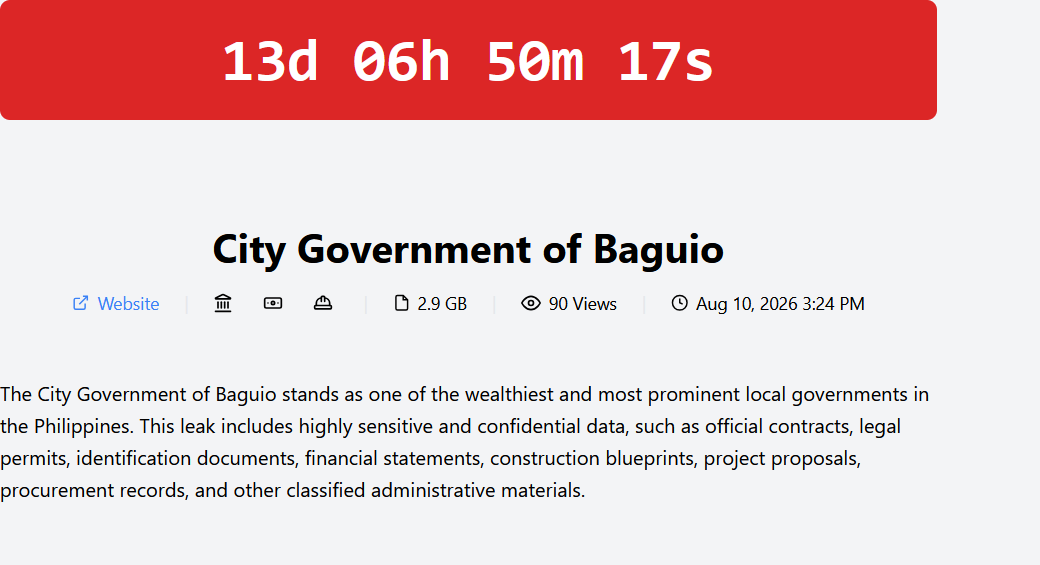
The City Government of Baguio has been listed as the first publicly identified victim of the ransomware group Emperador, according to multiple ransomware-tracking and threat-intelligence sources. The listing was identified on August 12, 2026, with some threat-intelligence reporting estimating that the alleged compromise occurred around August 10.
Emperador claims to have obtained approximately 2.9 GB of data from the local government. The group's listing describes the alleged stolen material as containing official contracts, legal permits, identification documents, financial statements, construction blueprints, project proposals, procurement records, and other administrative documents.
Screenshots from the leak listing provide examples of the files the group claims to have taken. Among the material displayed are what appear to be a Professional Identification Card, government forms, a building permit, and construction or architectural documents with a reported size of 2.9 GB.
The incident also appears to mark the first victim publicly listed by Emperador. Ransomware monitoring sources reported that the group had newly appeared on the ransomware landscape and had listed only one victim on its disclosure site, the City Government of Baguio.
However, the claims should still be treated as allegations pending independent verification. The public listing does not establish exactly how Emperador gained access, which systems were compromised, whether ransomware was actually deployed or whether the entire 2.9 GB archive originated from Baguio's systems. There is also no independently verified figure yet for the number of individuals whose information may have been exposed.
What is currently visible is the data-extortion component of the incident: Emperador allegedly obtained government files, published samples as proof of its claim, and placed the City Government of Baguio on its leak platform.
The screenshots are particularly notable because they show documents containing information that could potentially be used for identity theft, fraud, social engineering or further targeting if the material is genuine. Construction and infrastructure documents could also contain sensitive operational information, although the screenshots alone are insufficient to determine the security implications of those files.