After Every Conversation, We Need More Than a Platform to Blame
Editorial | After Every Conversation, We Need More Than a Platform to Blame
Every time tragedy strikes, the country searches for something immediate to blame.
After the June 2026 school shooting in Tacloban and several other school-related threats that were successfully intercepted by authorities, the public conversation once again turned toward digital platforms. Calls to regulate or even ban certain online services quickly gained traction. To many, it seemed like a necessary response. To others, it felt like another attempt to solve a complex problem with a simple answer.
Both perspectives deserve to be heard.
Government intervention is necessary when children's safety is at stake. Technology companies cannot ignore the environments they create. Schools must strengthen digital literacy. Parents have an irreplaceable role in guidance and supervision.
But none of these responsibilities exist in isolation.
The uncomfortable reality is that the Philippines has spent years reacting to online threats rather than preparing for them.
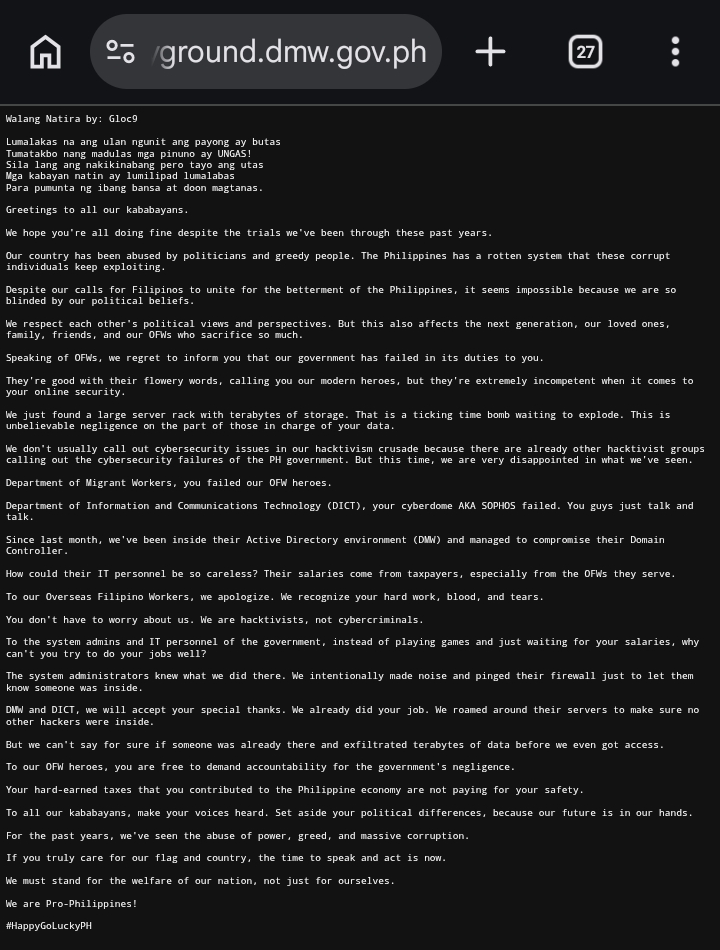
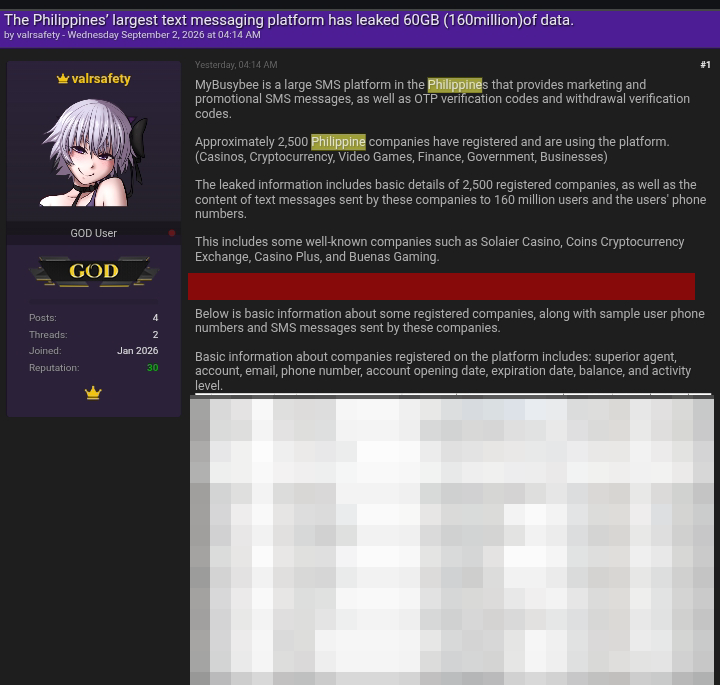
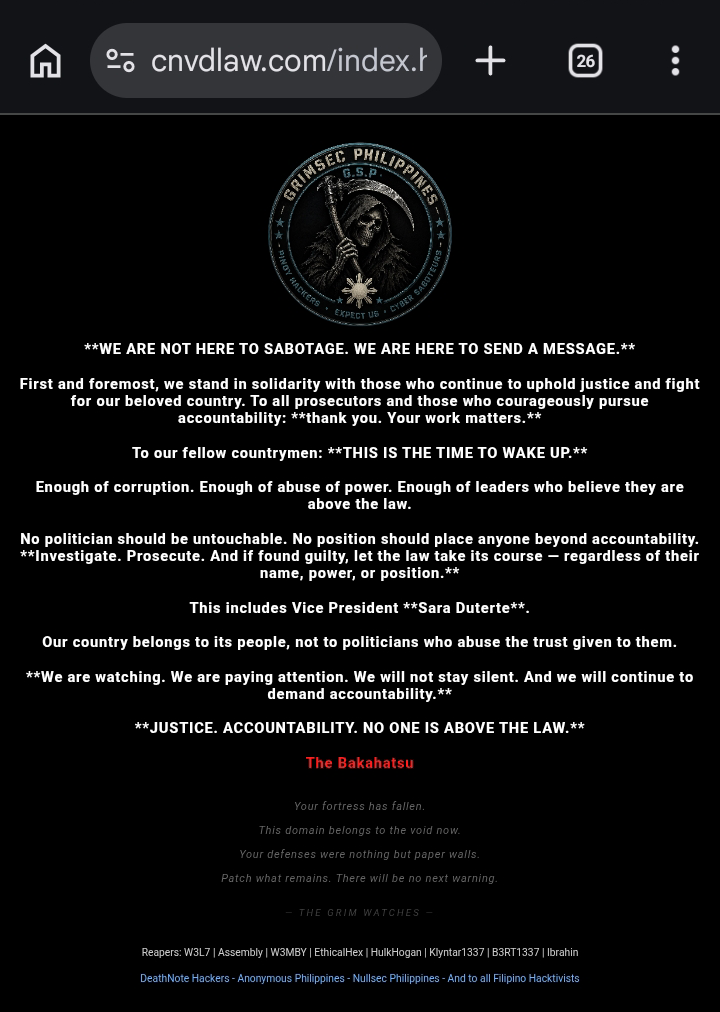
Since Deep Web Konek was established in 2023, our organization has documented and monitored a wide range of cybercrime-related activities affecting Filipinos. These include online child exploitation trends, data breaches affecting public and private institutions, phishing campaigns, scam operations, cyber threat intelligence monitoring, dark web activities, malicious infrastructure targeting Philippine organizations, and the growing misuse of social media by criminal actors.
Many of these reports were not intended simply to announce another cybersecurity incident. They were meant to identify patterns.
Patterns that showed the same vulnerabilities appearing repeatedly.
Patterns that demonstrated how criminal groups adapt faster than institutions.
Patterns that warned that online threats rarely remain confined to a single platform.
Even before we formally existed, several of its founding members had already been observing these issues for years. Long before cybercrime became a daily headline, they were monitoring underground communities, documenting emerging trends, studying online exploitation techniques, and trying to understand how rapidly the internet was changing.
The warning signs were there. The problem was never the absence of information.
It was our inability to sustain attention.
As a society, we become highly engaged after every major incident. For several days or perhaps a few weeks, the conversation dominates headlines, timelines, and public discussion. Experts are interviewed. Officials promise reforms. Citizens express outrage.
Then something else happens.
Another controversy emerges. Another viral video appears. Another issue dominates social media.
Slowly, the previous conversation disappears until another tragedy forces it back into public consciousness.
The cycle repeats.
This pattern is not unique to cybersecurity. It affects discussions on online child exploitation, misinformation, cyber scams, mental health, school safety, digital privacy, and countless other public issues.
Awareness has become seasonal. Concern has become reactive. That cycle must be broken.
Technology has fundamentally changed how people consume information. Social media rewards speed over depth, emotion over reflection, and engagement over understanding. Algorithms prioritize content that provokes immediate reactions, often leaving thoughtful discussions buried beneath outrage and speculation.
This environment creates another challenge. People increasingly consume information in fragments rather than in context.
A headline becomes a conclusion. A screenshot becomes evidence. A viral post becomes accepted truth before verification has even begun.
When public understanding is built on isolated pieces of information, complex issues become simplified into slogans and hashtags. Solutions become reduced to identifying one villain, one platform, or one institution.
Reality is rarely that simple.
Another consequence of this environment is herd mentality.
Public opinion often moves in waves. Once a dominant narrative begins circulating online, many people repeat it without questioning whether it accurately reflects the facts. Nuance becomes unpopular because certainty spreads faster than careful analysis.
This creates fertile ground for another troubling trend. The weaponization of tragedy.
Instead of asking what can be learned from national crises, many individuals and groups immediately seek to use them to advance personal, commercial, or ideological agendas. Some exploit fear to gain attention. Others use public outrage to attack rivals or reinforce existing beliefs. The victims and the lessons themselves gradually become secondary to the arguments surrounding them.
In doing so, the conversation shifts away from prevention and toward performance.
This benefits no one.
The government should continue strengthening cybercrime investigations, child protection initiatives, digital literacy programs, and cooperation with technology companies. Those efforts deserve recognition, but they must also be sustained beyond the immediate aftermath of high-profile incidents.
The private sector carries equal responsibility. Digital platforms must continue investing in child safety, proactive moderation, transparency, and rapid cooperation with legitimate investigations. Safety should not be treated as a feature to be added after public criticism. It should be part of the platform's design from the beginning.
Parents and schools remain society's first line of defense. Digital literacy is no longer optional. Children must be taught not only how to use technology, but how to question information, recognize manipulation, protect themselves online, and seek help when something feels wrong.
Finally, citizens have responsibilities of their own.
A stronger digital society cannot exist if public attention lasts only until the next trending topic. Every major cybercrime, every exploitation case, every data breach, every school-related threat, and every online safety issue should contribute to long-term reforms rather than temporary outrage.
The Tacloban tragedy should not become another event remembered only until the next crisis arrives.
If history has taught us anything, it is that cybercriminals, predators, and malicious actors do not stop adapting simply because public attention has moved elsewhere.
Neither should we.
The challenge before us is not deciding whether one platform should be regulated.
It is deciding whether we are finally prepared to confront the larger ecosystem that allows these threats to persist.
That responsibility belongs to government. It belongs to industry. It belongs to schools. It belongs to parents.
And it belongs to every one of us who chooses whether today's tragedy becomes tomorrow's forgotten headline or the moment we finally decide to break the cycle.