EXPLAINER: EVERYTHING YOU SHOULD KNOW ABOUT THE DARK WEB
Recent statements from government officials following the country's recent school shooting incidents have brought renewed attention to the dark web and its possible role in exposing individuals to violent or harmful online material.
Department of the Interior and Local Government Secretary Jonvic Remulla referred to the dark web when discussing the investigation, while Cybercrime Investigation and Coordinating Center (CICC) Undersecretary Renato Paraiso separately used the phrase “deep dark web.”
The two terms, however, should not be treated as interchangeable.
While the dark web can be associated with criminal activity, it is not itself synonymous with CRIME. More importantly, the deep web and dark web are different concepts, and “deep dark web” is not generally recognized as a separate technical layer of the Internet.
Understanding these distinctions is particularly important now that the terms are increasingly being used in discussions about violence, cybercrime and young people's exposure to harmful online content to avoid misleading statements.
For starters, the Internet is the global network infrastructure that connects computers, phones, servers and other devices while the World Wide Web, is one of the services operating over the Internet. Websites and webpages accessed through ordinary browsers are part of the Web.
Within the Web, content is often broadly described into layers as belonging to the surface web/clear web or the deep web.
The SURFACE WEB consists of publicly accessible webpages that can generally be discovered and indexed by conventional search engines. News websites, public government websites, blogs and publicly accessible pages are examples.
The DEEP WEB is different.
It refers broadly to Web content that is not publicly indexed by conventional search engines. This includes information behind logins or access restrictions, such as online banking accounts, private email, company databases, medical portals, university systems and private cloud storage. In other words, most people use the deep web every day without realizing it. Being part of the deep web does not mean that something is illegal, secret or dangerous.
So, what is the dark web? The dark web is a much narrower concept.
It generally refers to intentionally hidden websites and services that operate through specialized networks designed to provide greater privacy and anonymity. The best-known example is Tor, short for The Onion Router.
Tor allows communications to travel through multiple intermediary relays, with layers of encryption used to make it more difficult to directly identify the user and destination.
Websites operating as Tor onion services use onion domain and normally require SOFTWARE capable of connecting to the Tor network, such as the Tor Browser. Other anonymity-focused networks, including I2P, Freenet or now known as Hypanet, Zeronet also exist.
The important distinction is therefore:
The deep web is a broad category of Web content that is not publicly indexed. The dark web is a smaller portion involving intentionally hidden services and specialized anonymity technologies.
The dark web can therefore be considered part of the broader deep web, but the two terms are not interchangeable and should not be treated as same concept.
Another misconception is that the dark web is one enormous hidden website or a single underground network controlled by one entity. It is neither.
There are different anonymity networks, websites, services and communities operated independently by different people hence the decentralized format used.
Some services may exist for legitimate privacy purposes. Others may facilitate fraud, malware distribution, illegal marketplaces or other criminal activities. Some disappear quickly, while others remain accessible for years.
This makes the dark web considerably less organized than how it is often portrayed in fictional productions and sensationalized social media content.
Privacy networks can be used by journalists and whistleblowers who need to communicate without immediately revealing their identities. They can also be useful to people living under censorship or surveillance who need alternative ways to communicate or access information. These legitimate uses are an important part of understanding the technology.
However, the same privacy and anonymity features can also be exploited by criminals.
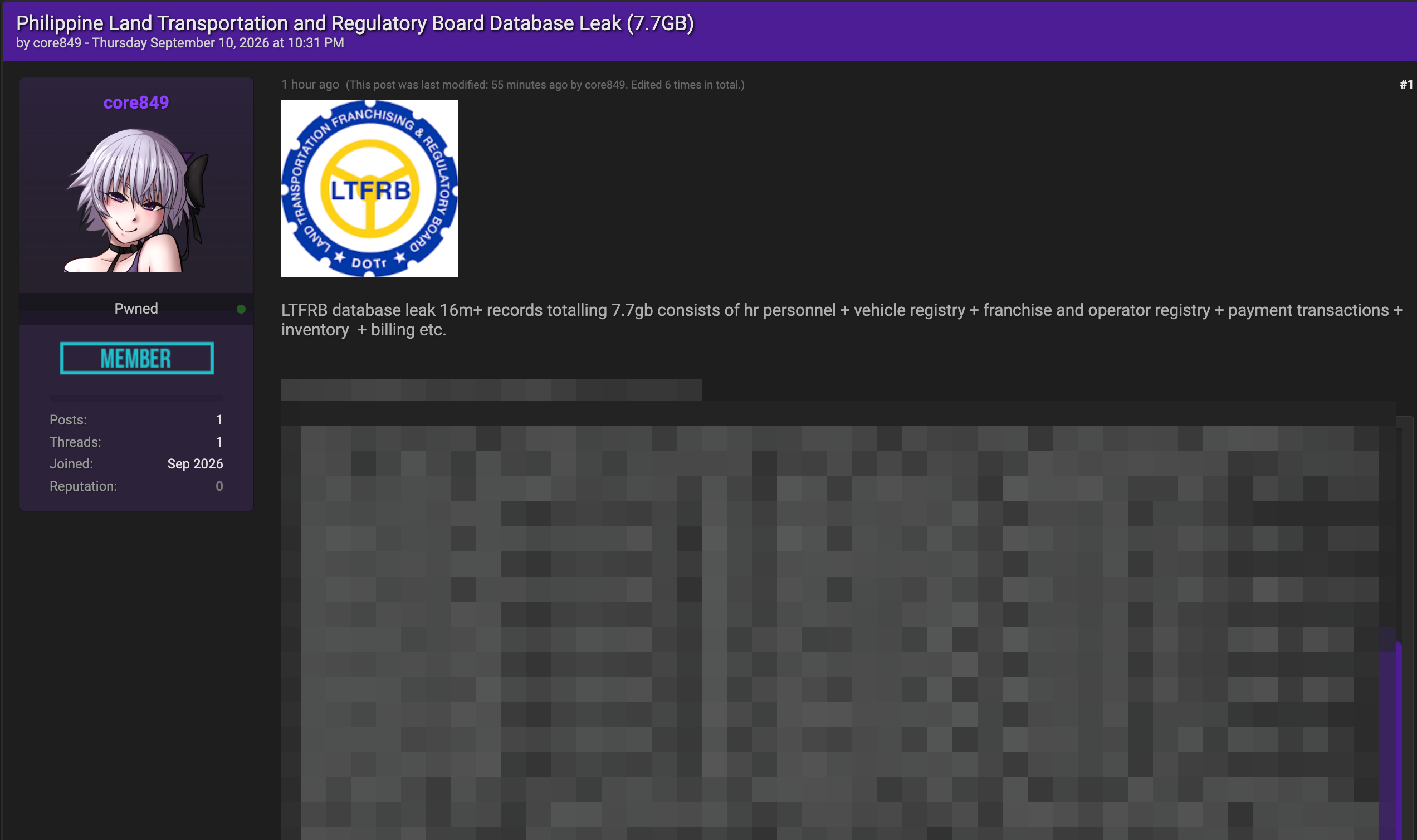
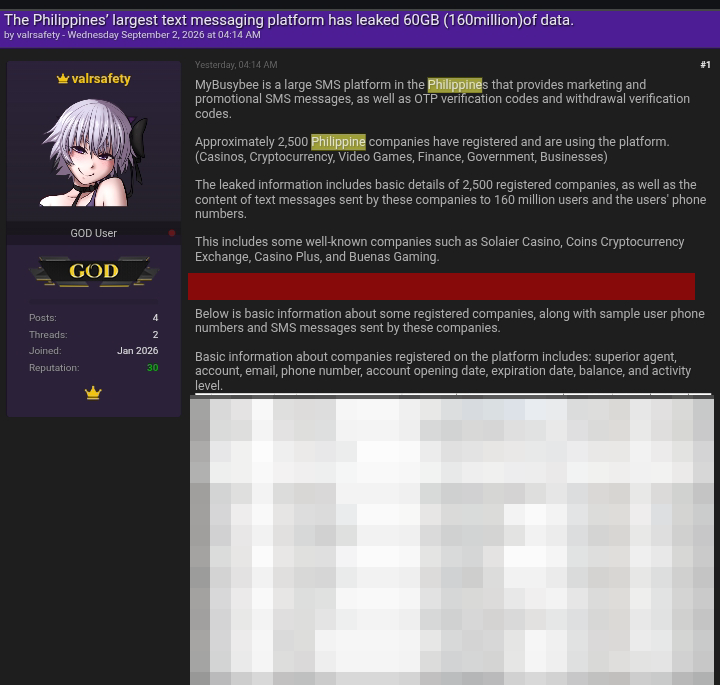
Illegal marketplaces, stolen credentials, financial information, malware, fraudulent services and other forms of cybercrime have been documented on dark-web services.
One of the best-known historical examples was Silk Road, an illegal online marketplace that operated through Tor before being shut down by U.S. authorities in 2013. The existence of criminal activity on the dark web is therefore real and the dangers are serious. But it does not follow that everything on the dark web is criminal.
Phishing, malware, fraud, stolen-account trading, illegal gambling and the distribution of harmful material can all occur on the ordinary Web, most common in the clear web. Criminals do not need a .onion address to commit cybercrime.
The same applies to violent or extremist material. Someone can encounter harmful content through social media, messaging applications, gaming communities, ordinary websites or private online groups without ever accessing a dark-web service. Consequently, identifying the dark web in an investigation does not automatically explain an individual's behavior.
Investigators still need to establish what the person accessed, what they communicated, who they interacted with, what influence may have occurred and whether a demonstrable connection exists between the online activity and the subsequent real-world act.
The distinction becomes particularly relevant following the recent shooting incidents and the statements from government officials. Remulla's references to the dark web and Paraiso's use of the phrase “deep dark web” have generated public discussion about whether hidden online networks played a role in the incidents. However, the terminology itself should not be mistaken for a conclusion about causation.
Finding evidence that a person accessed violent material, participated in an online community or used an anonymity network can be significant to an investigation. But exposure is not automatically causation.
A proper investigation would have to establish what material was accessed, how frequently it was accessed, what conversations or interactions occurred, whether the individual was encouraged or influenced by another person, and whether there is evidence connecting those activities to the planning or execution of the attack.
The dark web can be part of that investigative picture without being the complete explanation for a violent incident.
In addition, the current public discussion can also give the impression that the concepts of the deep web and dark web are relatively new to the Philippines.
They are not.
The country has had online communities discussing the dark web, cybersecurity, anonymity networks and related subjects for more than a decade.
Before Deep Web Konek was established, several of its eventual founding members were active writers and contributors within a broader Philippine online community generally known as the Deep Web Community, which was active roughly from 2013 to 2021.
During that period, members produced and shared articles and discussions through various Facebook pages, including Deep Web Enigma, Deep Web Readers, Deep Web PH, Deep Web Facts and Articles, Deep Web Archives, among others.
The material shared by these communities was not limited to cybercrime.
Articles and discussions covered subjects ranging from science and technology to politics, conspiracy theories, internet culture and other topics that attracted the interest of the community.
Several pseudonymous figures became known among participants during those years, including Caution, Grandark, DeckardCain, Creative Self, INCUBUSXXX and GRIMLOCKER, among others.
These names represented contributors, writers and administrators associated with different pages and parts of the community. The history is relevant because discussions about the dark web did not suddenly begin in the Philippines because of recent news events.
There was already a local community examining these subjects years before the terminology became more widely discussed by the general public.
As the years passed, disagreements between members, writers and administrators became increasingly prominent. Personal conflicts and grievances also contributed to the fragmentation of the community and the eventual disappearance or inactivity of many of its pages. The community's decline did not mean that interest in the subject disappeared.
Some of the people who had participated in those earlier communities continued working with cybersecurity, technology, research and online investigations in different capacities.
The experience also contributed to the eventual development of new communities and initiatives that approached the subject differently.
What was once largely discussed within niche online communities is now increasingly appearing in mainstream discussions about cybersecurity, child protection, violent extremism, misinformation and public safety. That shift makes accurate terminology more important.
The dark web should not be presented as a mysterious separate Internet where everything is illegal. The deep web should not be described as another name for the dark web.
And the phrase “deep dark web” should not be treated as though it describes a universally recognized technical layer beyond the dark web.
At the same time, the legitimate uses of anonymity should not obscure the documented criminal activity that occurs through some hidden services.
Both realities can exist at the same time. The simplest way to understand the difference.
And when it appears in a criminal investigation, it should be treated as one part of the evidence that investigators must examine, rather than as an automatic explanation for what happened.
For the public, the distinction is simple but important:
Deep web does not mean dark web. Dark web does not mean illegal. And being exposed to something online does not, by itself, establish that it caused someone to commit a crime.