Editorial: When Millions of Records Move for Pocket Change
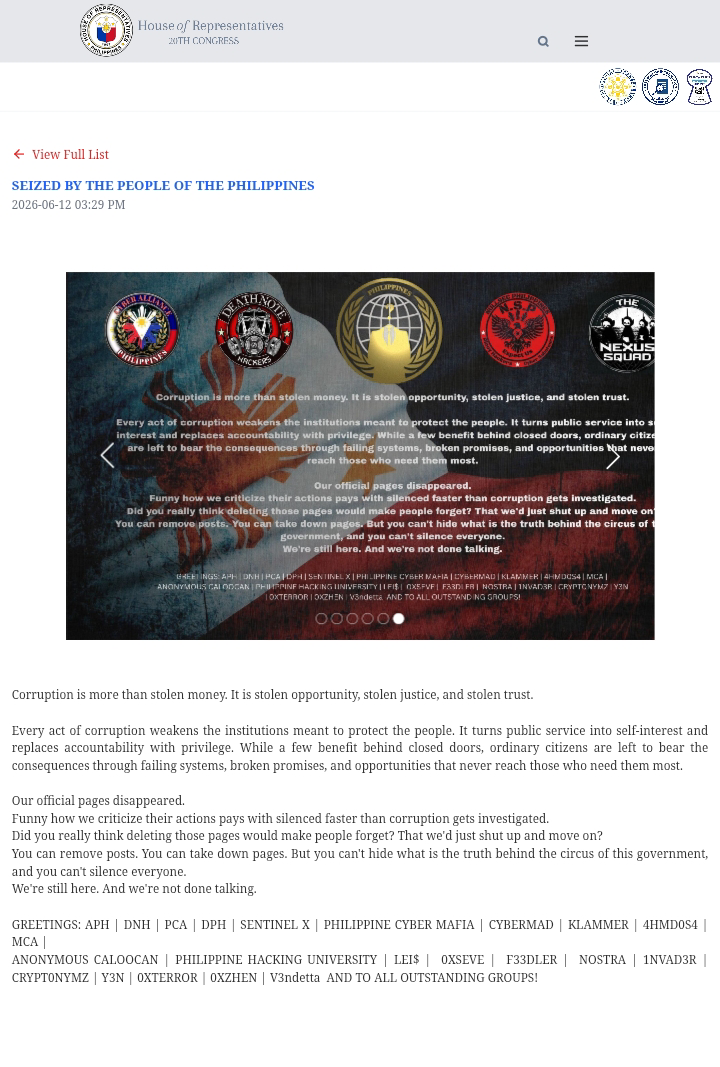
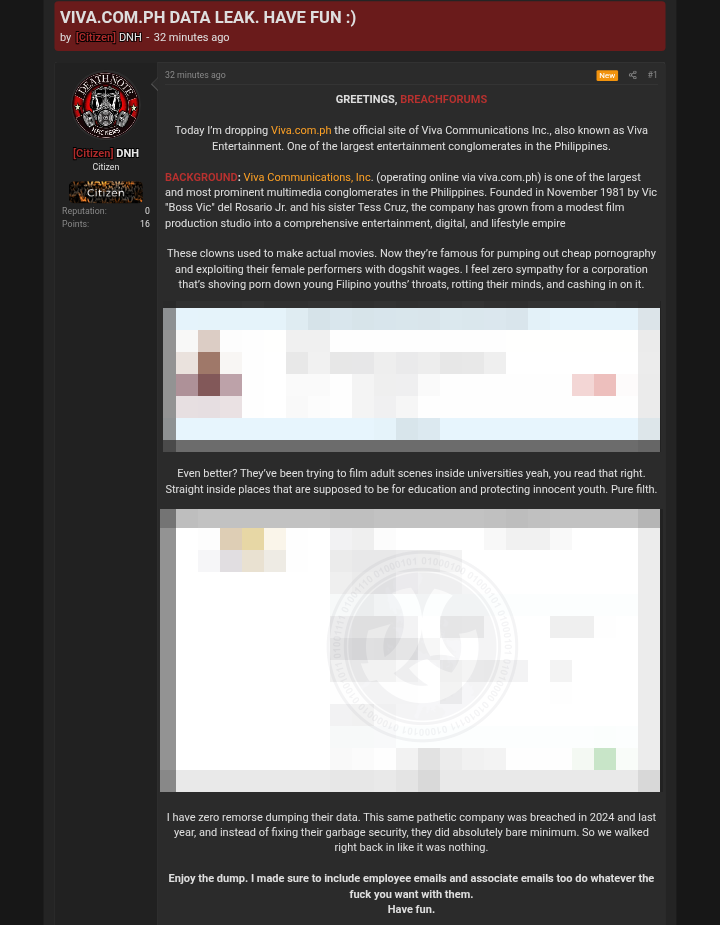
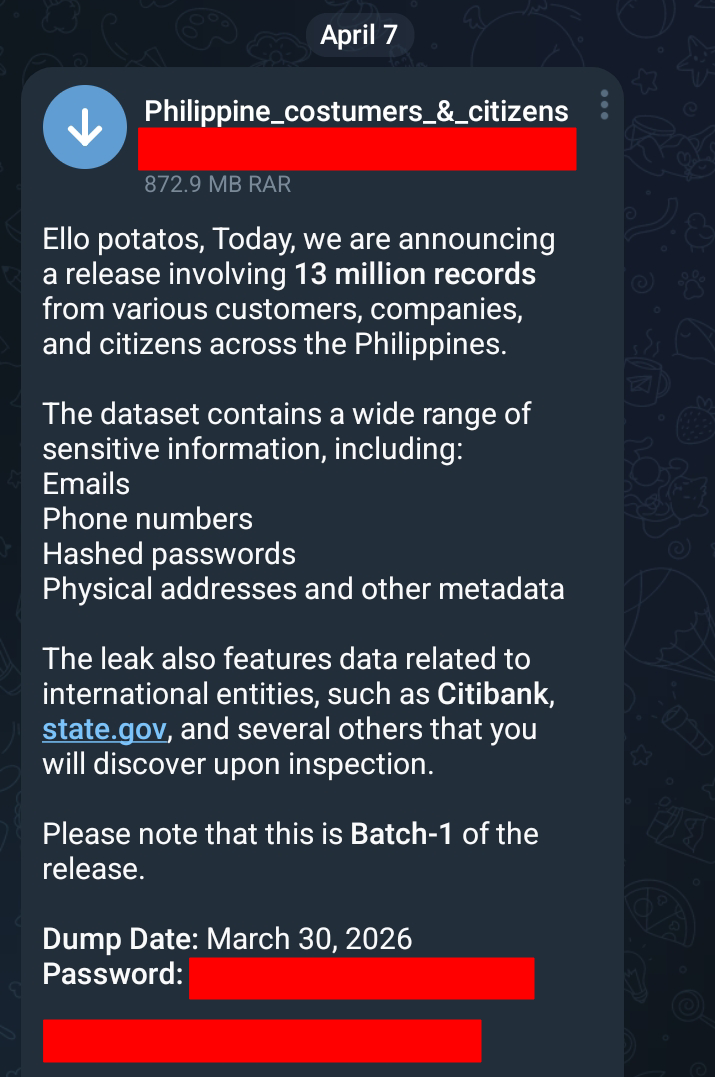
The Philippines now faces data breaches with frightening frequency. Large incidents with some affecting hundreds of thousands, others affecting millions are reported so often that the headlines blur. These leaks are not harmless lists: they are raw material for a global criminal industry. On the dark web, personal information is commonly sold in bulk packages, if not thousands, hundreds of thousands, or even millions of records at a time and the economics of those packages explains why large-scale fraud is now an industrial business, not random opportunism.
Security reporting and market studies show consistent unit prices for common data types (Fullz, emails, social accounts, bank logins, medical records), but those retail-like figures tell only part of the story. Crucially, sellers often offer entire datasets bundled at a fixed package price. The Deep Web Konek Cybersecurity Division observed marketplace listings claiming millions of user records sold as one dump for low five-figure USD sums; similar public marketplace reports show sellers offering large Philippine-user dumps in bundles priced around $25,000 (payable in privacy coins like Monero). That is the transactional reality: mass exposure for one one-time payment.
Put plainly: a buyer can legally transfer a single payment (for example, $25,000) and obtain millions of records. Using a conservative central-bank exchange rate (BSP daily reference), $25,000 converts to roughly ₱1.48 million. Split across 7–8 million records, the scale many sellers now advertise that is only a few centavos per record in immediate cost to the criminal buyer. The per-record acquisition cost in such bulk deals is therefore effectively negligible.
How does that translate into profit? Criminal business models are volume driven: they need only a small percentage of records to “pay off.” Suppose a fraud ring purchases a 7-million-record dump for about ₱1.48 million. If the criminals successfully exploit 1% of those records (70,000 victims) and if each successful fraud yields between ₱1,000 and ₱10,000 depending on the scheme and victim profile, gross takings range from ₱70 million to ₱700 million. Even in the low-yield scenario (₱1,000 per victim), the criminal’s return is dozens of times the initial outlay. These are conservative calculations meant to show scale and plausibility; real ROI varies by scheme, victim profile, and criminal skill. (Calculation details: ₱1.48M initial spend for 7M records → 70,000 exploited victims at ₱1,000/₱5,000/₱10,000 yields ₱70M / ₱350M / ₱700M respectively.)
Two things make these numbers worse. First, the same dataset often resurfaces, resold, parsed, and refined across multiple markets, increasing the number of attackers who can weaponize it. Second, the dark-market ecosystem itself inflates supply through resale and deceptive practices: sellers sometimes relist the same dump multiple times, repackage fragments as “new,” or run exit-scams that fragment traceability. In short, one breach can produce many separate criminal campaigns over months or years. Market research and incident reporting consistently document this reseller/resale cycle, which multiplies harm long after initial disclosure.
Do not let small per-record figures fool you into complacency. The unit price in a retail table (e.g., “Fullz: $20–$100”) helps compare items, but bulk economics are what finance criminal enterprises. A database of 100,000 Fullz priced modestly for a buyer can still represent tens of millions of pesos in potential fraud revenue once the records are weaponized across loans, SIM-swap scams, business-email compromise attempts, and credential stuffing. Real world incidents including massive Philippine-facing dumps reported in recent years show attackers pivot rapidly from data acquisition to monetization.
What should alarm policymakers and the public is the asymmetry: defenders must prevent every leak; attackers profit from only a tiny fraction. If the Philippines experiences a weekly breach somewhere, even if it seems small, the aggregated supply becomes a factory for fraud. A single misconfigured portal or an unsecured backup can create a package that funds months of criminal activity. Public reporting shows that breaches affecting millions are not hypothetical; they occur and are then traded in dark channels, amplifying risk for entire communities and sectors.
Finally, remember the market is not clean. The dark web also hosts scams against buyers: fake dumps, recycled public data sold as “exclusive,” and exit scams. That creates an opaque, high-volume churn where the existence of a listing may be as damaging as the data it contains because every listing prompts copy, parsing, and attempts to use the data. The end result for ordinary Filipinos is unpredictable and long lasting: credit damage, fraudulent loans, impersonation, false job applications, and reputational harm that takes years to correct.
If the goal is to reduce these industrial profits, the responses must address scale, not just headlines. Companies and the government must assume breach inevitability and privatize containment capacity: minimize stored fields, adopt robust encryption and tokenization, run frequent data exfiltration detection, and notify quickly and transparently when exposures occur.
Regulators must scale enforcement, mandate rapid, granular disclosure (so individuals can take action), and require institutions to support victims (credit freezes, remediation funds). Citizens must demand better data hygiene from services and treat data-sharing as a deliberate transaction, not a frictionless convenience. Market economics show why cheap bulk buys and tiny success rates for attackers still yield massive profits. Tackling scale tackles profit.